Community Corner
Looking for Fraud in All the Wrong Places
There's much more opportunity for voter fraud with absentee ballots than at the polls.
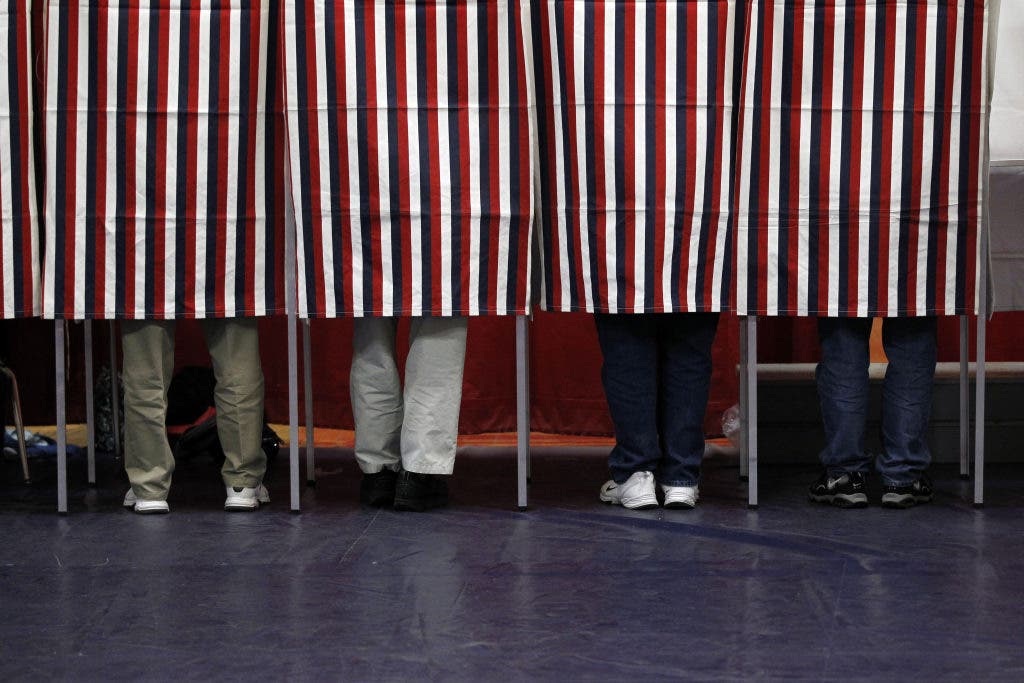

There are four seasons in the coal region, according to the terrific web site CoalRegion.com: Almost winter, winter, still winter and construction.
That observation came to mind during this past election season, which seemed to have the longevity of a coal region winter. At the risk of prolonging a season that many want to forget, I’d like to revisit one issue that is sure to come up again in future elections: Voter ID.
There were complaints at some polls in Lehigh and Northampton counties that voters were being asked for identification even though a Commonwealth Court judge issued an injunction Oct. 2 that said photo identification wasn’t required this election (except for first-time voters.)
Find out what's happening in Bethlehemwith free, real-time updates from Patch.
The judge’s ruling, however, allowed the state to mandate that poll workers ask all voters for photo identification in what they termed a “soft roll out” of the law. But the ruling also said people could vote without ID. Some voters at certain precincts felt poll workers did not emphasize quickly enough that the ID wasn’t necessary this time.
President Barack Obama’s margin of victory in the presidential race was large enough in Pennsylvania to make those disputes seem more like glitches than crises. But in a tight race things could get dicey.
Find out what's happening in Bethlehemwith free, real-time updates from Patch.
All this when the last I checked there were zero cases of in-person voting fraud on record in Pennsylvania. Which makes sense because trying to rig an election that way is much too labor-intensive and risky.
Think about it. You have to find a person who is a registered voter but whom you know won’t be voting at the polls or by absentee ballot. You have to locate the voter’s polling place and send someone of the right sex to vote in the registered voter’s place. And that fraudulent voter has to be able to reproduce the signature of the person he or she is impersonating reasonably well. That’s a lot of work and risk for one vote.
But absentee voting is a different story. A comprehensive analysis of voter fraud cases since 2000 by News21, an investigative reporting project, found that while in-person voter fraud was virtually non-existent, there were 491 cases of absentee ballot fraud and 400 cases of voter registration fraud nationwide. “A required photo ID at the polls would not have prevented these cases,” the report said.
Using absentee ballots makes it easier to buy and sell votes and to tamper with the process in other ways, according to a fascinating story in the Oct. 7 New York Times.
“Election administrators have a shorthand name for a central weakness of voting by mail,” the story says. “They call it granny farming.”
People with political campaigns can go into nursing homes and senior centers and exert “subtle pressure” while “helping” elderly voters with their absentee ballots, the story said. The secrecy of those paper ballots can be compromised.
The Times story quotes Judge Richard A. Posner of the U.S. Court of Appeals for the Seventh Circuit as saying, “Absentee voting is to voting in person as a take-home exam is to a proctored one.”
Part of Pennsylvania’s new Voter ID law requires those voting by absentee ballot to provide a driver's license number, last four digits of their Social Security number or a copy of an acceptable ID.
Those who are really concerned about voter fraud and are not just out to suppress the vote should consider applying that part of the law while scrapping the unnecessary photo ID at the polls.
